
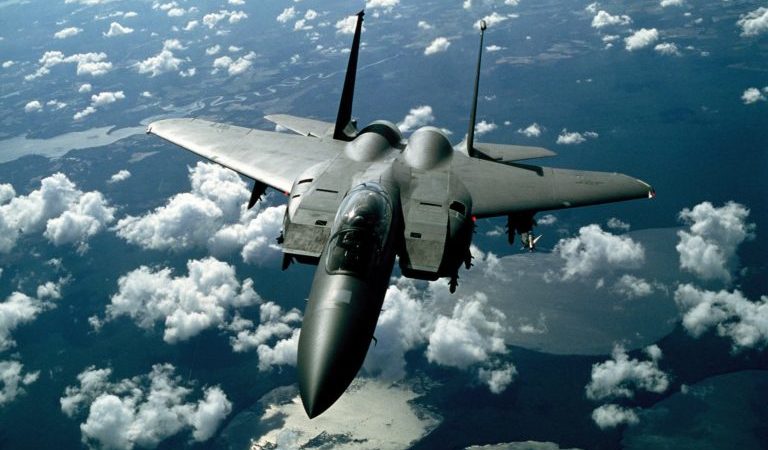
Carbon fibre tubes outperform metals at high altitude and under high stress because their stiffness-to-weight ratio is roughly 5 to 12 times greater than steel, aluminium, or titanium. That single property advantage cascades into better buckling resistance, near-zero thermal movement, and fatigue life that metals simply cannot match.
Every other element for sustaining high altitude, such as longer service life, fewer maintenance cycles, and more stable structures, follows from that single fact.
What High Altitude Actually Does to a Structure
Most people assume “high altitude” is a weight problem. You want lighter materials because every kilogram costs fuel, payload capacity, or range. However, weight alone isn’t the main factor.
At altitude, the environment itself changes how a structure fails.
The air pressure drops dramatically
At 40,000 feet, pressure is roughly one-fifth of what it is at sea level. Under those conditions, long, slender structural members, booms, spars, and masts do not break under tension. They buckle. They bow and collapse before they ever reach their breaking point. The property that resists buckling is stiffness, more than raw strength. A stiffer tube holds its shape. But a stronger-but-softer tube buckles first.
The temperature swings are severe
At 11,000 metres, the ambient temperature sits at -56.5°C. On a typical mission, a structure climbs from ground temperature to a fluctuation of 60 to 70 degrees, every single flight.
Every time that happens, every component in the structure expands on the way up and contracts on the way down. That is not a problem for a single flight. Over hundreds or thousands of flights, it quietly fatigues joints, loosens bonds, and causes things to go out of alignment.
Vibration becomes harder to manage
Thinner air absorbs less vibration. Structures at altitude sit closer to the point where vibration resonates through them. Over time, that adds up to material fatigue, even without any dramatic single overload event.
The material you choose for an altitude structure has to handle all three of these simultaneously. Most metals were never evaluated against that combined challenge. They were adopted because engineers already knew how to work with them.
Why Carbon Fibre Wins on Weight and Stiffness
When engineers choose a structural material, they look at two things together:
- How stiff it is
- How heavy it is.
A material that is very stiff but also very heavy is not necessarily useful, as you end up adding a lot of weight to get the stiffness you need. It is better to consider a material that is stiff relative to its weight.
| Material | Specific Stiffness (stiffness per unit of weight) |
| Mild Steel | 25.5 |
| Aluminium (aerospace grade) | 25.6 |
| Titanium | 25.7 |
| Carbon Fibre – Standard Grade (T300) | 130.7 |
| Carbon Fibre – Mid Grade (T800) | 163.3 |
| Carbon Fibre – High Grade (M40J) | 213 |
| Carbon Fibre – Ultra High Grade (M60J) | 304.7 |
Choosing between them is mostly about cost and how dense you want the material to be, more than the stiffness. They are essentially the same material from a stiffness-per-kilogram perspective.
Carbon fibre at its most basic grade is five times higher. At high grades, it reaches eight to twelve times higher.
Hence, a carbon fibre tube can deliver the same structural stiffness as a metal tube at a fraction of the weight. Or, for the same weight, it can be dramatically stiffer, which is what matters for buckling resistance at altitude.
Why Aluminium Quietly Fails Over Time at Altitude
All materials expand when they get warm and contract when they cool. The rate at which they do this varies significantly between materials. Aluminium expands and contracts relatively quickly. Carbon fibre, in the fibre direction, barely moves at all.
Aluminium moves at 23 units per degree of temperature change. Carbon fibre moves at 0 to 2 units per degree. That is a ten-to-twenty-times difference.
To make that concrete, a one-metre aluminium tube going through a 70-degree temperature swing moves about 1.6 millimetres. The equivalent carbon fibre tube moves less than 0.14 millimetres, about the width of a human hair.
That might sound small, but when multiplied by 1,000 flights, the aluminium tube has cumulatively moved 1,600 millimetres at every joint. The carbon fibre tube has moved 140 millimetres. That difference shows up as loosening joints, bond failures, misaligned sensors, and structures that require frequent re-inspection and retorquing.
There is one caveat worth understanding, which is that the resin, the bonded matrix that holds the carbon fibres together, is what limits performance at extreme temperatures, not the fibre itself.
Standard aerospace resin systems work reliably from around -55°C down to the lowest altitudes encountered, up to around 120°C. For specific applications, the resin must be specified correctly. This is a manufacturing decision that happens before the tube is made.
How Carbon Fibre Handles Heavy Structural Loads
Four properties make carbon fibre the better structural choice when loads are high and compound.
-
It resists buckling better
Because it is stiffer per kilogram, a carbon fibre tube maintains its shape under the compressive loads that cause buckling at altitude. This is the load case that governs structural design at altitude, and stiffness is the only thing that addresses it.
-
It handles twisting loads well. when specified correctly
When a carbon fibre tube is manufactured with fibres running at 45-degree angles as part of its construction, it handles torsional (twisting) loads very effectively. This is a manufacturing decision, not a fixed material property. It must be specified for the application.
-
Its stiffness can be engineered directionally
Because carbon fibre is made of oriented fibres, the stiffness can be placed exactly where the load acts, whether that is along the length, rotationally, or in a combination of directions. With metals, stiffness is uniform in all directions. You cannot direct it. With carbon fibre, you can, which means less material used, less weight, and better structural performance exactly where it is needed.
-
It handles repetitive loading better over time
Metals, particularly aluminium, fail under repeated loading through crack growth. A tiny crack forms under stress, grows a little with every load cycle, and eventually the structure fails. Carbon fibre handles repetitive loading differently: damage distributes across the fibre network rather than concentrating into a single crack.
This gives CFRP structures more predictable behaviour and generally longer service life under the kind of continuous, repetitive loading that altitude platforms accumulate.
Roll-Wrapped vs Pultruded: Why the Manufacturing Method Matters
Not all carbon fibre tubes are made the same way. The manufacturing method determines what the tube can and cannot handle, and this is a specification decision most buyers make too quickly.
Roll-wrapped tubes are made by wrapping layers of carbon fibre around a precision mandrel in specific orientations, some layers running along the length, some at angles, some around the circumference. Each layer adds structural capability in a different direction. The result is a tube that can handle loads coming from multiple directions at once.
Pultruded tubes are made by pulling fibres straight through a resin bath and a fixed die. All the fibres run in one direction, along the length of the tube. This makes them very stiff in that direction. Under any other load, twisting, bending, or side forces, their performance is significantly lower.
| Factors | Roll-Wrapped | Pultruded |
| Handles loads from multiple directions | Yes | No, axial loads only |
| Torsional (twisting) load resistance | High | Low |
| Dimensional precision | High | Moderate |
| Custom specification | Yes | Limited |
| Right application | Aerospace, defence, UAV structure | Simple rods and push-pull linkages |
If the tube will experience anything beyond a pure push or pull force along its length, any twisting, bending, or combined loading, a roll-wrapped tube is the correct specification. Pultruded tubes are good products for the right application. Structural aerospace and altitude applications are not that application.
Where These Carbon Fibre Tubes Are Used
-
Aerospace and long-endurance aircraft
Structural booms, wing spars, antenna masts, and sensor frames for high-altitude platforms. These applications need a structure that holds its exact shape across a temperature range from +50°C to -56.5°C, repeatedly, over a long service life. That requirement alone removes aluminium from serious consideration. Advanced Composites Engineering has manufactured roll-wrapped structural tubes for aerospace and UAV platforms operating at these limits.
-
Defence platforms
Aerostat frames, surveillance payload structures, and tactical UAV airframes. Beyond structural performance, defence procurement requires material that is non-metallic (relevant to radar signature), supply-chain auditable, and supplied with documented material traceability.
Military and Defence Composite Solutions
-
High-altitude scientific platforms
For balloon frames, stratospheric research structures, and instrument platforms operate where most engineering materials stop performing reliably. Carbon fibre with the correct resin system maintains structural integrity and dimensional stability at temperatures where aluminium joints begin to fatigue.
How to Specify the Right Tube?
If you are a decision-maker approving a specification, rather than writing it, here is what you need to understand about the process.
Step 1: Establish what the structure actually needs to do
Is it critical that the tube holds its shape precisely under load (stiffness-critical), or does it just need to not break (strength-critical)? Most altitude structures are stiffness-critical. This changes which grade of carbon fibre is appropriate.
Step 2: Match the carbon fibre grade to the stiffness requirement
There are four grades in common use. Standard grade is cost-effective for moderate requirements. Mid-grade suits most aerospace structural applications. High-grade and ultra-high-grade are for applications where mass is the absolute primary constraint, long-endurance platforms, and precision instrument structures. Higher grade does not mean universally better: ultra-high grade trades some strength for maximum stiffness. It is specified by application.
Step 3: Define how the fibres are oriented in the tube wall
This determines what directions the tube resists load in. A tube designed for pure axial stiffness is built differently from one designed for torsion or combined loading. This is the layup schedule, which is specified at the manufacturing stage and cannot be changed later.
Step 4: Set the dimensional tolerances
For bonded and structural interfaces, tight tolerances matter. Standard engineering tolerances for this type of application are well-established; the manufacturer should be able to meet and document them.
Step 5: Design the end fittings and joints at the same time as the tube, not after
The most common and most avoidable failure mode in altitude CFRP applications is a poorly designed joint between the carbon fibre tube and a metal fitting. The two materials expand and contract at very different rates. The adhesive or fastener connecting them must be specified with that in mind. This is a design decision, not a procurement decision.
Step 6: Require full documented material traceability
For aerospace and defence applications, this is not optional. A complete material record includes the fibre specification, the resin specification, the manufacturing process record, dimensional inspection results, and, for safety-critical parts, non-destructive testing evidence. Tubes supplied without this documentation create a qualification and compliance risk that no cost saving justifies.
Get in touch with our composites specialists
Have a specification question for an altitude or structural application? Our engineering team engages at the specification stage, before an order is placed. Submit a brief description, and we will respond within one business day.
Why Work With Advanced Composites Engineering?
- Bespoke engineering for altitude and high-stress applications: Tubes tailored to your exact specifications, diameter, wall thickness, fibre orientation, and resin system.
- 40+ years of altitude and defence experience: Insights gained from aerospace and defence programmes are applied directly to your structural requirement.
- Full material traceability as standard: For aerospace and defence procurement, compliance is non-negotiable. Every tube ships with fibre certification, resin specification, manufacturing records, dimensional inspection reports, and NDT evidence for safety-critical parts.
- Engineering engagement at the specification stage: We respond to technical queries within one business day. We would rather review your load case on a call than send you a brochure.
Ready to Specify the Right Carbon Fibre Tube for Your Application?
Our engineering team engages before you place an order, when the specification is still being defined.
Submit the enquiries of your carbon fibre tubes requirements for altitude or high-stress application, and our composites specialists will respond within one business day with technical guidance specific to your load case.
If you already have an idea and are looking to move forward, provide your specifications and receive a tailored quote for roll-wrapped carbon fibre tubes that match your aerospace, defence, or high-altitude structural requirement.
Call our composite specialists at 01670 335490 to discuss your load case, tube sizing, joint design, material selection, or application-specific technical requirements directly with our engineering team. We cover aerospace, defence, UAV, HAPS, and high-altitude scientific applications.