
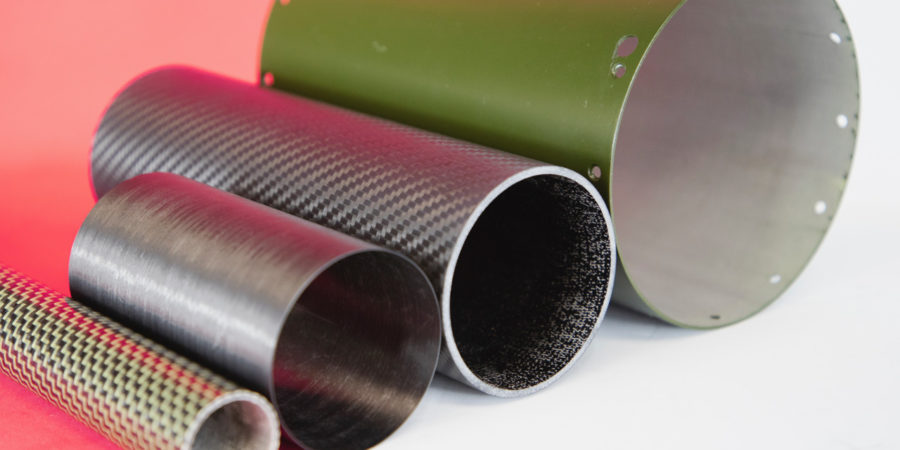
Choosing composite components isn’t simply about swapping metal for carbon fibre. It’s a design decision that shapes performance, cost, and long-term reliability from the very first sketch.
Many engineering teams approach composites with a straightforward goal: reduce weight. Yet the projects that deliver genuine breakthroughs understand something deeper. Composites don’t behave like metals. They reward careful planning and punish rushed assumptions. Get the early decisions right, and you unlock structural advantages that metals cannot match. Get them wrong, and you’ll face expensive redesigns, underperformance, or components that cannot be manufactured at an acceptable cost.
Why Composite Selection Is a Design Decision, Not a Material Swap
Metals are isotropic; their properties remain consistent regardless of direction. Composites work fundamentally differently. They’re anisotropic, meaning strength and stiffness vary dramatically depending on fibre direction.
This isn’t a limitation, it’s an opportunity. When fibres align with primary load paths, composites outperform metals spectacularly. Misalign them, and performance collapses. A carbon fibre tube with perfect axial fibre alignment handles enormous tensile loads whilst remaining extraordinarily light. Rotate those fibres by 45 degrees, and tensile strength can drop by more than half.
Defining the True Performance Requirements
Before discussing carbon versus glass or comparing resin systems, define what the component must actually achieve.
What does the component need to do?
Distinguish between structural and functional roles. A drone airframe arm is structural. It must handle bending moments, vibration, and impact whilst maintaining stiffness. A non-conductive spacer tube is functional, weight and dimensional stability matter, but ultimate strength may not.
Loading considerations
Real-world loading rarely resembles textbook examples. Static loads are constant, dynamic loads vary with use, and fatigue loads repeat thousands or millions of times, gradually degrading materials.
Composites excel at fatigue resistance, often delivering more than twice the fatigue life of aluminium under similar conditions. This makes them particularly valuable in applications where repetitive loading dominates.
Service life and failure consequences
Safety-critical aerospace components demand different design margins than prototype sports equipment. Understanding failure consequences shapes design conservatism, testing requirements, and documentation rigour.
Load Paths and Fibre Orientation
This is where composite engineering departs most dramatically from metal design.
How fibre direction controls strength
Carbon and glass fibres provide exceptional tensile strength along their length but minimal strength perpendicular to their direction. This directional nature allows engineers to place strength precisely where loads occur.
Advanced Composite Engineering’s roll-wrap manufacturing process achieves true zero-degree axial fibre alignment, placing reinforcement exactly where it delivers maximum value.
Common design mistakes
Applying metal-thinking to composites. Metal components designed for complex loads simply get thicker. Composite components require carefully planned fibre layups that address each load direction independently.
Another mistake is ignoring fibre continuity. Sharp corners force fibres to terminate abruptly, creating stress concentrations that trigger premature failure. Successful composite designs incorporate generous radii and smooth transitions.
Selecting the Right Material System
You’re not selecting carbon or glass. You’re selecting a material system where fibre and resin work together.
Fibre selection: carbon, glass, aramid
- Carbon fibre delivers exceptional stiffness and strength at minimal weight. It’s the natural choice when performance per kilogram is paramount, aerospace, robotics, and precision instruments.
- Glass fibre offers excellent strength at significantly lower cost. For applications where absolute weight minimisation isn’t critical but corrosion resistance matters, glass fibre provides outstanding value. Marine applications frequently use glass fibre for this reason.
- Aramid fibres (Kevlar) excel at impact resistance. They’re ideal for hybrid layups where specific zones need protection whilst other areas prioritise stiffness.
Resin systems
Epoxy resins provide excellent mechanical properties and elevated-temperature performance up to 120-150°C, the default choice for most structural applications.
Vinyl ester resins offer superior chemical resistance for applications involving fuels or solvents. Phenolic resins provide fire resistance where flame-spread prevention is critical.
Why fibre and resin must work together
Fibre provides strength. Resin provides environmental protection and transfers loads between fibres. A carbon fibre tube with inappropriate resin might fail prematurely due to moisture ingress or chemical attack, despite having adequate structural strength.
Manufacturing Process Considerations
A brilliant design that cannot be manufactured consistently is bad.
How manufacturing methods influence design
Filament winding produces optimised cylindrical forms. Pultrusion creates constant-cross-section profiles efficiently but cannot accommodate tapers. Hand layup offers geometric flexibility but introduces variability.
Advanced Composite Engineering’s roll-wrap technique enables progressive tapers, localised reinforcements, and true zero-degree fibre alignment, features unavailable with alternative methods.
Tolerances and scalability
If your design requires ±0.1mm dimensional tolerance, verifying the manufacturing process can deliver this repeatedly before committing to tooling. Ensure the manufacturing approach scales economically from prototype to production volumes.
Tooling implications
Traditional closed-mould manufacturing requires expensive matched metal tooling. Roll-wrap manufacturing uses relatively inexpensive mandrels, making custom sizes economically viable even for modest quantities.
Environmental and Operational Considerations
Temperature, moisture, UV, chemical exposure
Standard epoxy composites handle continuous temperatures to 120-150°C. Applications involving higher temperatures require specialised resin systems. Understanding complete environmental exposure prevents premature degradation.
Durability and maintenance
Unlike metals that gradually corrode, composites fail through resin degradation, fibre breakage, or delamination. Visible damage often precedes catastrophic failure. Composite components in benign environments may require essentially zero maintenance beyond periodic inspection.
Sustainability considerations
Composites contribute to sustainability primarily through lightweighting benefits. Recycled carbon fibre technologies are maturing, offering performance approaching virgin fibre whilst reducing environmental impact.
Compliance and Testing Requirements
Industry standards
Aerospace demands adherence to AS9100 standards. Defence applications follow military specifications. Medical devices require biocompatibility testing. Understanding applicable standards early prevents late-stage compliance surprises.
Testing strategies
Mechanical testing validates strength. Environmental testing confirms durability under operational conditions. Fatigue testing ensures adequate service life. Testing strategies should be proportionate to application risk and failure consequences.
Prototyping and Design Validation
Physical prototypes provide an idea of the real-world behaviour that analysis cannot fully predict. They expose integration issues and manufacturing challenges early when changes remain inexpensive.
Testing before production
Mechanical and environmental testing identifies necessary refinements before production tooling is committed, dramatically reducing the risk of expensive late-stage changes.
Iteration as a strength
Unlike metals requiring new machining programs, composite design changes often need only modest modifications to layup schedules or mandrel dimensions.
Partner with Advanced Composite Engineering
Advanced Composite Engineering brings decades of expertise in lightweight composite solutions tailored for demanding applications across aerospace, defence, motorsport, marine, and industrial automation.
If you’re developing high-performance sports equipment, precision instrumentation, drone airframes, or industrial automation components, ACE delivers bespoke solutions designed and manufactured in our UK facility.
Call our composite specialists on 01670 335490 to discuss your requirements in detail. Our team brings practical experience across diverse sectors and can guide you through material selection, design optimisation, and manufacturing strategies that deliver results.
Request a quote for custom carbon fibre tubes or composite components manufactured to your exact specifications. We work with businesses of all sizes, from startups developing breakthrough products to established manufacturers seeking performance improvements.
Download our composite glossary to understand your material options and technical terminology that defines modern lightweight engineering. Knowledge empowers better decisions at every stage of development.
Contact ACE today and discover what’s possible when design thinking meets manufacturing expertise.
Frequently Asked Questions
1. At what stage should composites be considered?
The concept or early design stage offers the greatest value. Composite components perform best when designed specifically for composite manufacturing methods. Retrofitting composites into designs originally conceived for metal often results in suboptimal performance and higher costs. Early involvement allows manufacturing constraints to inform design decisions rather than limiting them.
2. How do I know if a composite component is being over-engineered?
Warning signs include unnecessarily thick laminates that add weight without strength benefits; specifying carbon when glass would suffice; and adding plies “for safety” without engineering justification. Over-engineered composites cost more, weigh more, take longer to manufacture, and may introduce processing challenges. Right-sizing starts with clearly defined performance requirements and appropriate safety factors.
3. What are the most common mistakes when specifying composites for the first time?
Late material selection after design is complete. Treating composites like metals with different densities. Ignoring fibre orientation and load path alignment. Underestimating manufacturing constraints. Focusing exclusively on strength whilst neglecting durability or environmental resistance. These mistakes share a common root: approaching composites as drop-in material substitutes rather than design decisions requiring different thinking.
4. Are composites suitable if production volumes are low or uncertain?
Yes, often more suitable than metal alternatives. Many composite manufacturing methods use relatively inexpensive tooling compared to metal stamping or die-casting. This makes composites economically viable for prototype quantities through several hundred units annually. Low-volume economics favour composites, particularly when components are complex or require properties like corrosion resistance that eliminate ongoing maintenance costs.
5. How much design freedom do composites offer compared to metals?
Composites offer substantial freedom in some dimensions but introduce constraints in others. They excel at creating integrated features, load-tailored structures, and optimised thickness distributions that would require assembly of multiple metal parts. However, composites demand respect for fibre continuity, tool access during manufacturing, and directional property variation. Design freedom exists abundantly within these constraints, but requires different thinking than metal design.